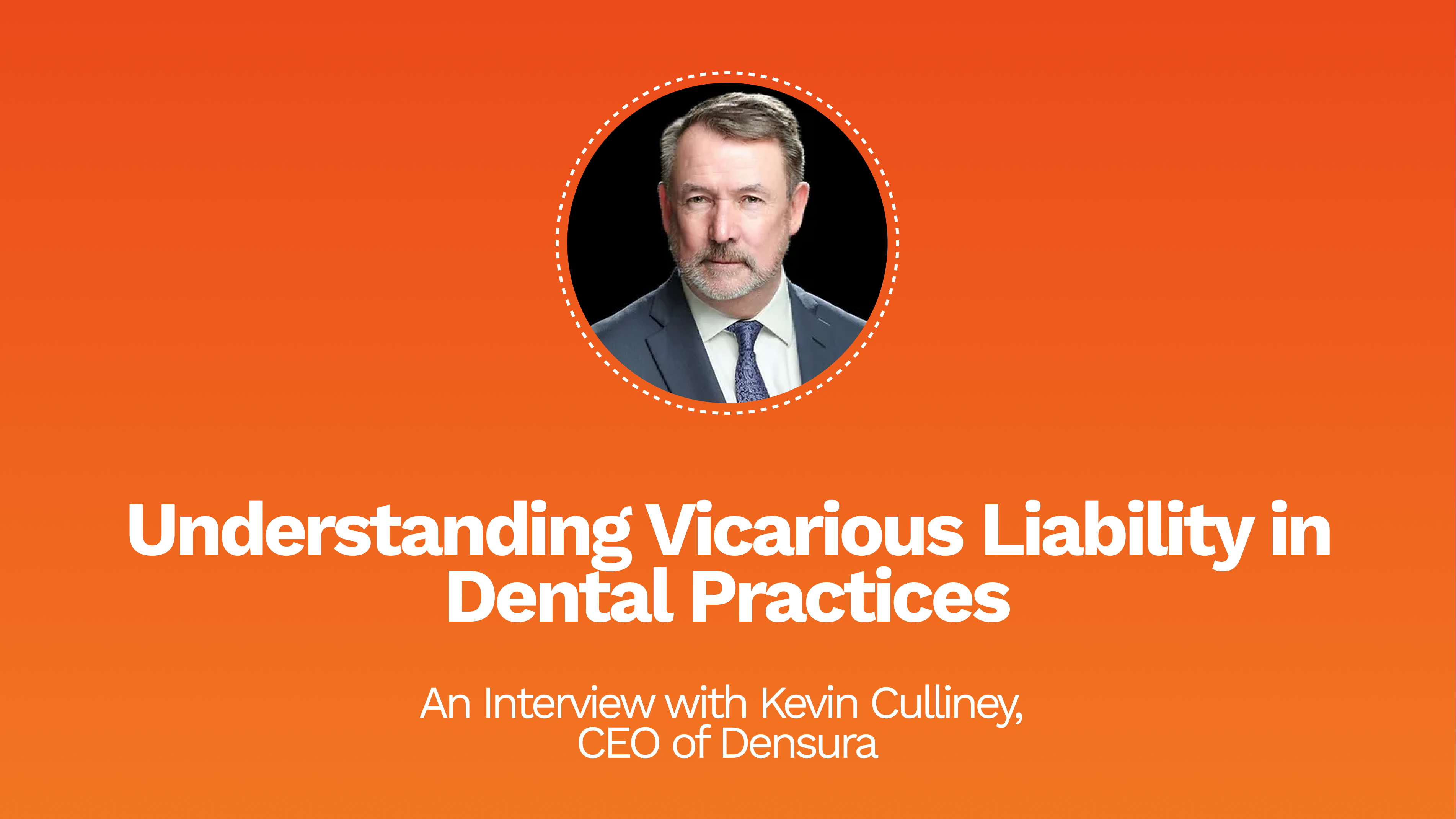
Q: Hello, Kevin. Could you start by introducing Densura and explaining what vicarious liability is?
Kevin: Absolutely, Densura was established in response to requests from the clinical leads at Oasis, which is now part of Bupa. They were facing rising indemnity costs and issues with vicarious liability. Essentially, vicarious liability means that the corporate entity, such as a dental practice owner or group, can be held liable for the actions of its self-employed dentists. This became a significant concern for Oasis, prompting us to develop a solution. We collaborated with insurers and eventually partnered with Royal and Sun Alliance (RSA) to provide indemnity for both the corporate entity and individual self-employed dentists. This ensures that if a dentist is absent, we can handle any claims on their behalf. This approach has been effective, and we’ve since expanded to support many other dental corporates.
Q: Could you elaborate on vicarious liability and its implications for dental practices?
Kevin: Vicarious Liability is intertwined with the concept of a non-delegable duty of care. This was highlighted in the case of Raj Rattan, where the court found that even though the patient was treated by a dentist, the corporate entity was still liable due to this duty of care. Essentially, if a patient brings a claim and the treating dentist is unavailable, the corporate entity might have to handle the claim. This can occur if the dentist has moved abroad or if there’s an issue with their indemnity, such as forgetting to renew it after maternity leave.
Q: Should practice owners understand the nuances between vicarious liability and a non-delegable duty of care?
Kevin: While it’s beneficial to know the basics, practice owners don’t need to get bogged down by the legal intricacies. The main takeaway is that there are steps they can take to protect themselves. For instance, ensuring that self-employed dentists appear truly self-employed and securing the appropriate indemnity cover. For NHS contracts, there are specific nuances that need attention, but our team at Densura specialises in these matters and can provide guidance and support.
Q: What advice would you give to practice owners regarding indemnity and vicarious liability?
Kevin: For practice owners, especially those with multiple practices, it’s wise to consider a specific indemnity policy for the entity. This policy protects the practice if an individual dentist’s indemnity does not respond to a claim, such as if they’ve moved abroad or if their defence body doesn’t respond. This way, the entity is protected without affecting the owner’s personal cover.
Q: Is there anything else practice owners should be aware of?
Kevin: Being a practice owner is challenging, with numerous responsibilities and potential liabilities. It’s crucial to talk to your broker and put the necessary protections in place. While nothing is free, the cost of peace of mind is relatively low compared to the potential risks. This allows you to focus on building your practice without worrying about these liabilities.
Q: Thank you, Kevin, for this insightful discussion on vicarious liability and the services Densura offers.
Kevin: You’re welcome. It’s been a pleasure discussing these important topics. Remember, protecting your practice is crucial, and at Densura, we’re here to help you navigate these challenges.
At Densura, we believe in empowering both clinicians and patients through education and support. If you have encountered a complaint, claim, or need guidance on any patient-related issue, our team is here to assist you. Contact us at 0207 933 0349, email us at notifications@densura.com or click here. We are committed to providing prompt and professional support to ensure your concerns are addressed effectively.